|
Claude Monet sits at the hinge point of modern art. He didn’t just help invent Impressionism; he forced painting to reconsider its purpose. Light, time, atmosphere—these became the subject, not the backdrop. This short biographical sketch traces Monet’s path from his early years and struggles in Paris to the carefully constructed world of Giverny, where he spent the final decades of his life painting light itself. Rather than a catalogue of works, it’s a focused look at how Monet worked, what shaped him, and why his late paintings still feel radically modern today.
Monet was born in Paris in 1840 but raised in Le Havre, where his family ran a modest grocery business. Monet was rather difficult early on. He disliked school, resisted authority, and showed talent mainly for sharp, irreverent caricatures of local townspeople. By 16, he was well known locally, though not for anything his parents considered respectable. His trajectory changed when he met Eugène Boudin. Boudin insisted that Monet paint outdoors and pay attention to changing light rather than fixed forms. Monet resisted at first, then absorbed the lesson completely. Later in life, he acknowledged Boudin as the single most important influence on his development. It was one of the few times he admitted artistic debt.
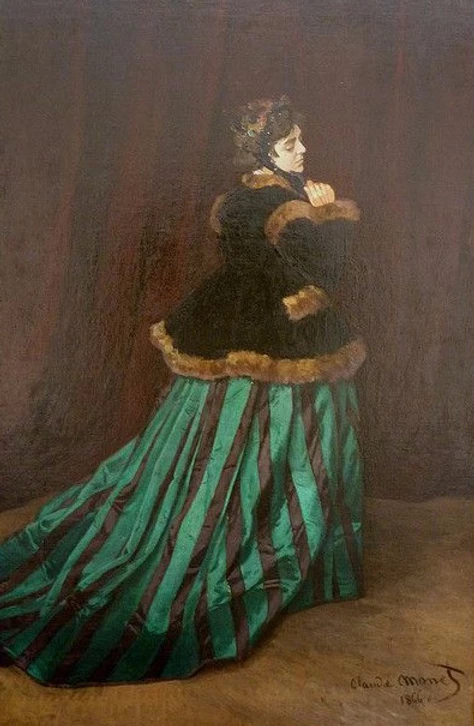
Paris followed, unevenly. Monet studied intermittently, avoided academic discipline, and struggled financially. He admired the city’s energy but rejected its rules. The Salon mostly rejected him too, with the exception of Woman in the Green Dress, an early success that briefly suggested the establishment might accept him. It wouldn’t. In Paris, Monet met Camille Doncieux, a model who became his partner, muse, and later his wife. For more than a decade, she appears repeatedly in his paintings—reading, strolling, reclining—quietly anchoring his early work. Their life together was precarious. Money was scarce, debts constant, and recognition unreliable. Monet came close more than once to abandoning painting altogether.
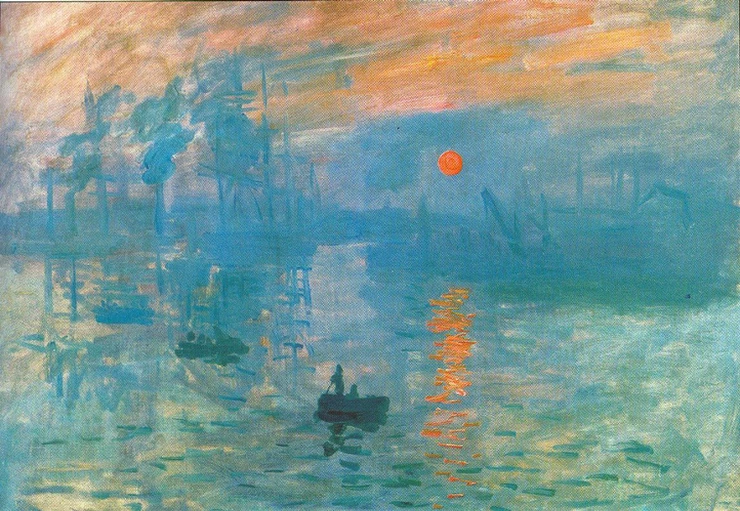
Rather than bend to academic expectations, Monet and a group of like-minded painters broke away from the Salon and organized their own independent exhibitions. The Impressionist shows offered artistic freedom, but at the cost of financial security and critical approval. When Monet painted Impression, Sunrise in 1872, he could not have known it would give a name to an entire movement. A hostile critic seized on the title in a dismissive review, mocking the painting as unfinished. The label stuck, transforming what was meant as an insult into one of the most influential movements in modern art, Impressionism.
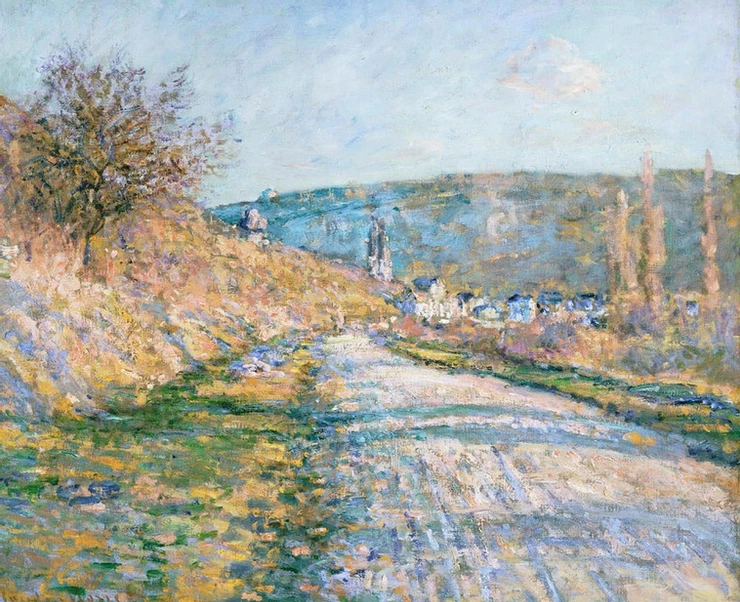
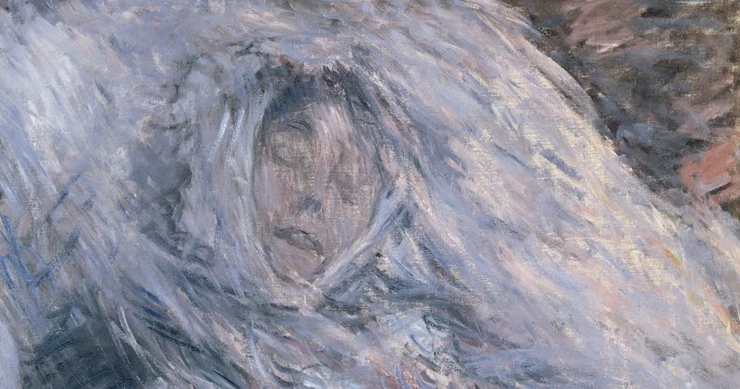
Between 1878 and 1881, Monet lived in Vétheuil, a formative but often overlooked period. He painted the Seine obsessively—its banks, reflections, ice floes, and shifting skies. These years anticipated what would later happen at Giverny: repetition, immersion, and an insistence on returning to the same motif under changing conditions. In Vetheuil, Monet’s wife Camille became desperately ill and died at just age 32 in 1879. Even in tragedy Monet wouldn’t, or couldn’t, stop painting.
Monet first saw Giverny from a train window. He got off almost impulsively, spoke to locals, and rented an old farmhouse. In 1883, Monet left behind Paris forever and moved to rural Giverny in Normandy with his next life partner Alice Hoschede. He arrived middle-aged and nearly penniless. Nine years had passed since Impression, Sunrise. Fame was still theoretical. Over the next four decades, everything changed, though slowly. Monet became wealthy, celebrated, and fiercely independent.
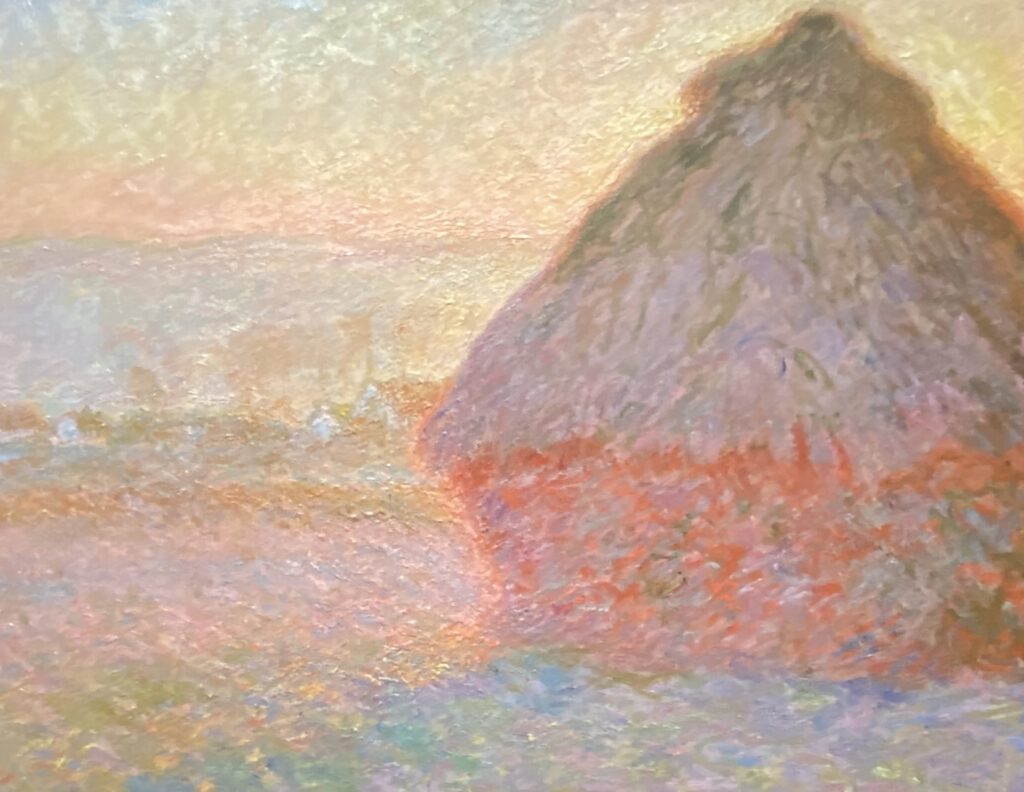
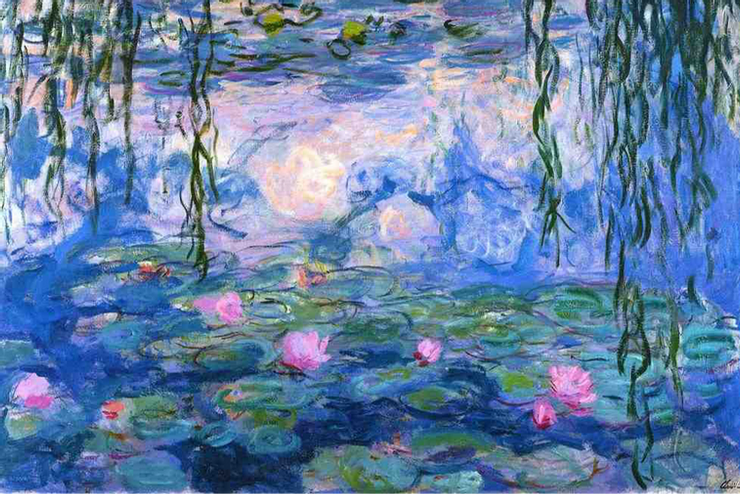
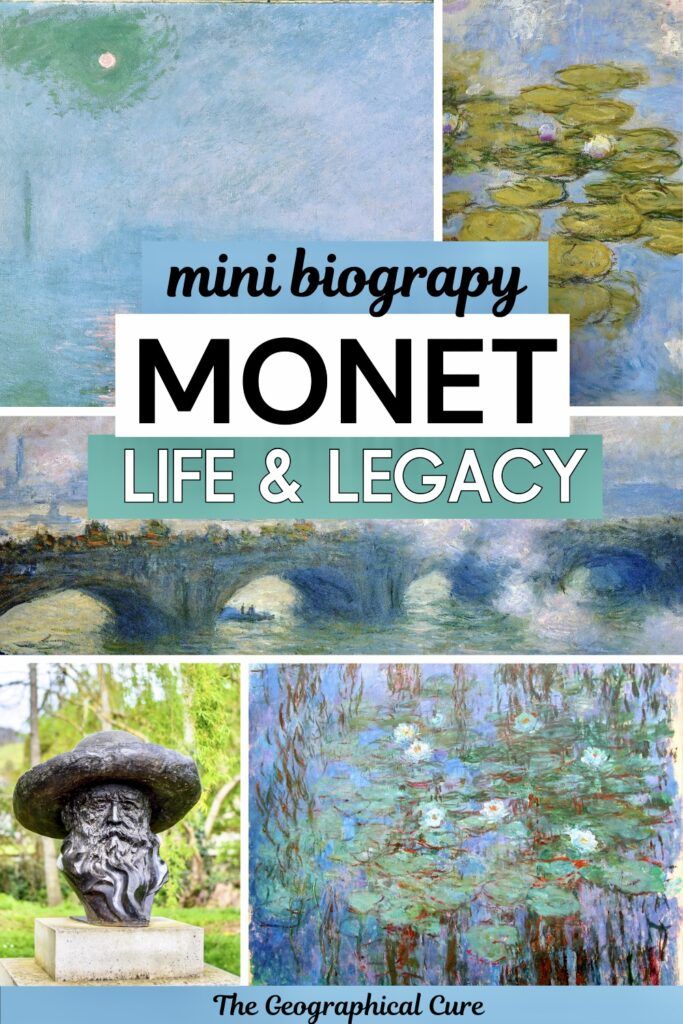
He stopped painting people altogether. Nature was enough. Monet produced some of his most famous works: shimmering poplars, glowing haystacks, and iridescent sheets of water lilies in a blurry pastel palette. During the 1890s, Monet also created his famous “series” — multiple renditions of Rouen Cathedral, the Houses of Parliament, poplars, and haystacks.
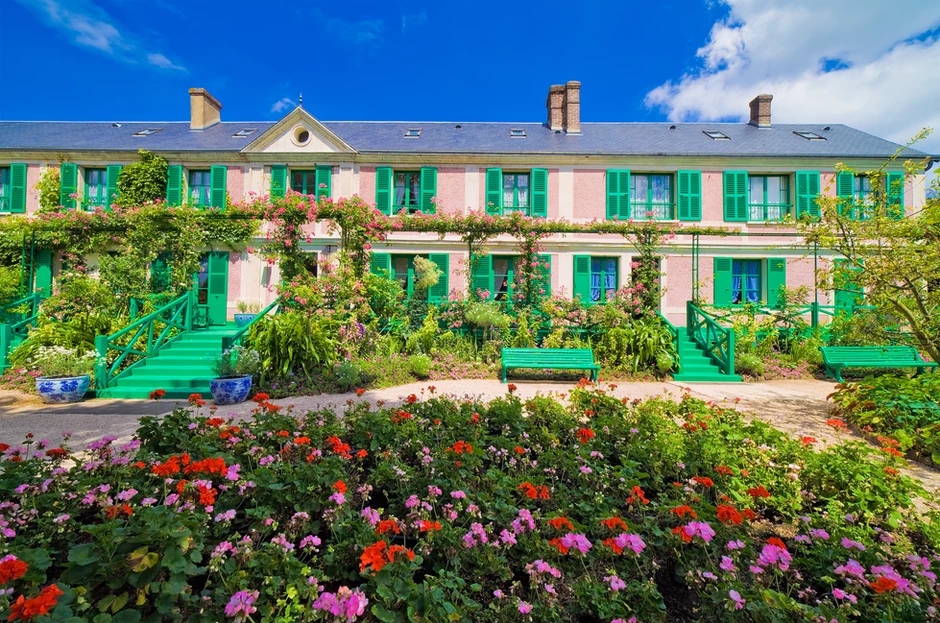
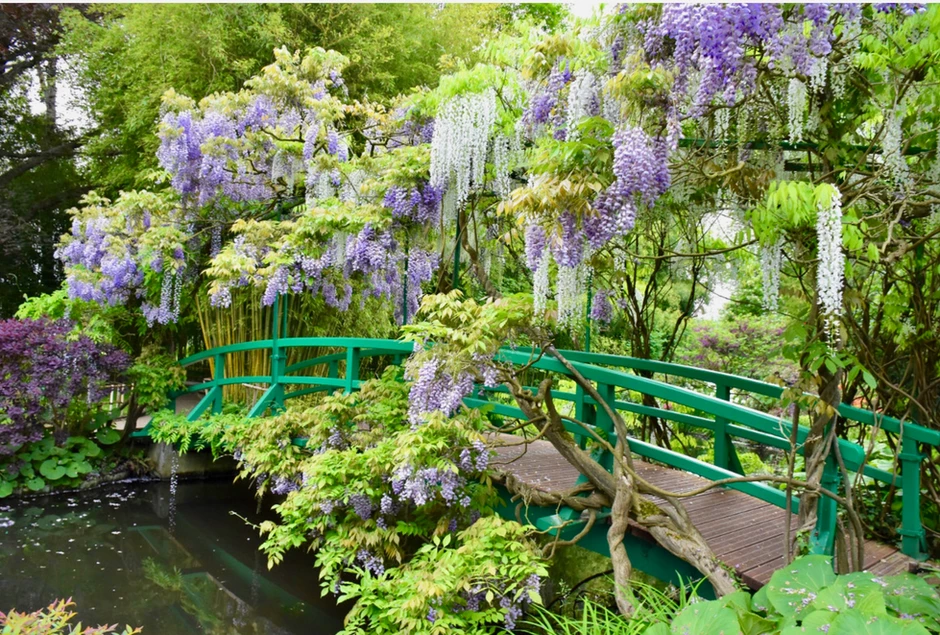
Monet also began to construct his world deliberately. He expanded the house, built studios, installed a greenhouse, diverted a river, and created a Japanese garden. He read horticultural journals, consulted professional gardeners, and collaborated with friends like Gustave Caillebotte. Gardening was not a hobby. It was a parallel practice. He once joked that he was good for nothing except painting and gardening. It wasn’t really a joke. The gardens became his second studio—a living subject he could shape, control, and observe endlessly. It was a a one-of-a-kind pastoral paradise, born from a great artist’s obsession.
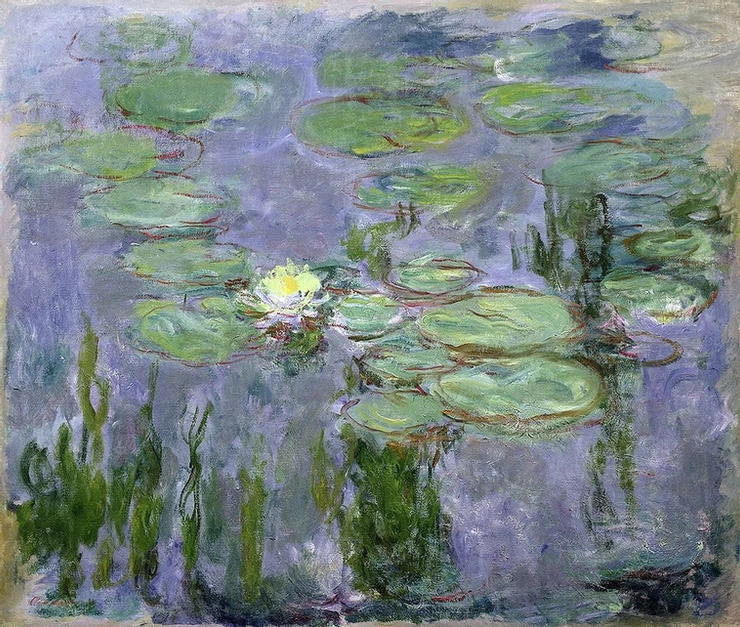
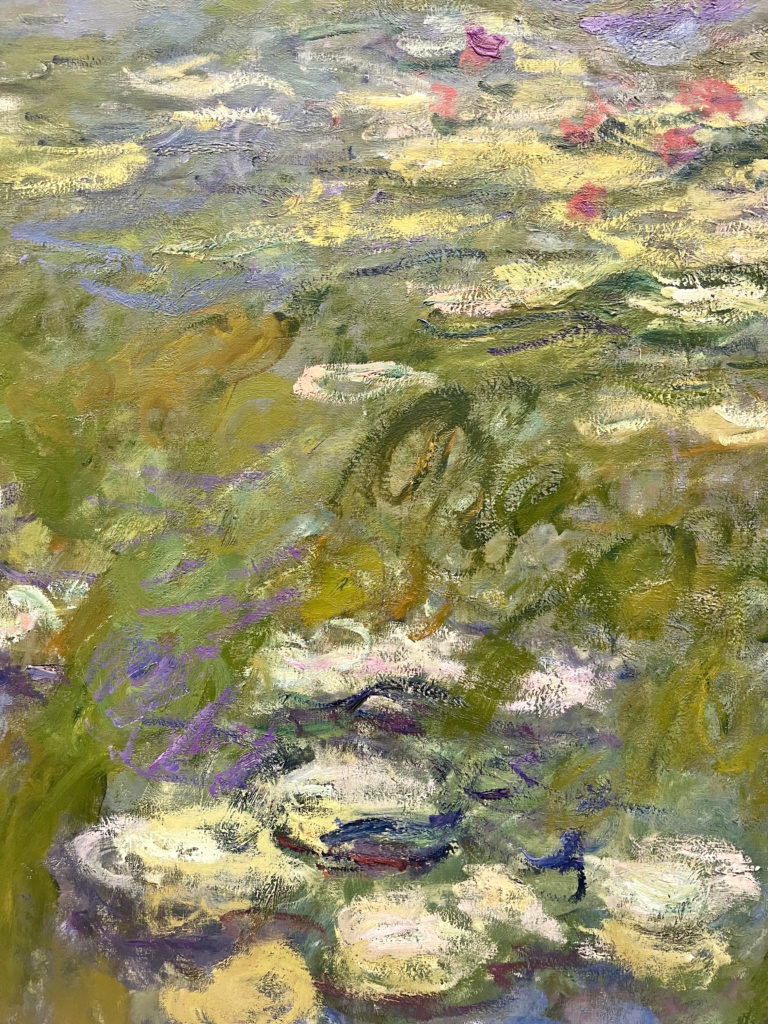
To accommodate large canvases, he built a barn-like atelier with skylights and wheeled easels. He worked obsessively, often for hours without interruption. The water lilies became his life’s work. He created more than 250 paintings, produced largely in his final decades. He focused not on flowers but on water itself. Its surface, depth, reflection, and instability. There is no horizon, no edge, no fixed point. The paintings unfold rather than conclude.
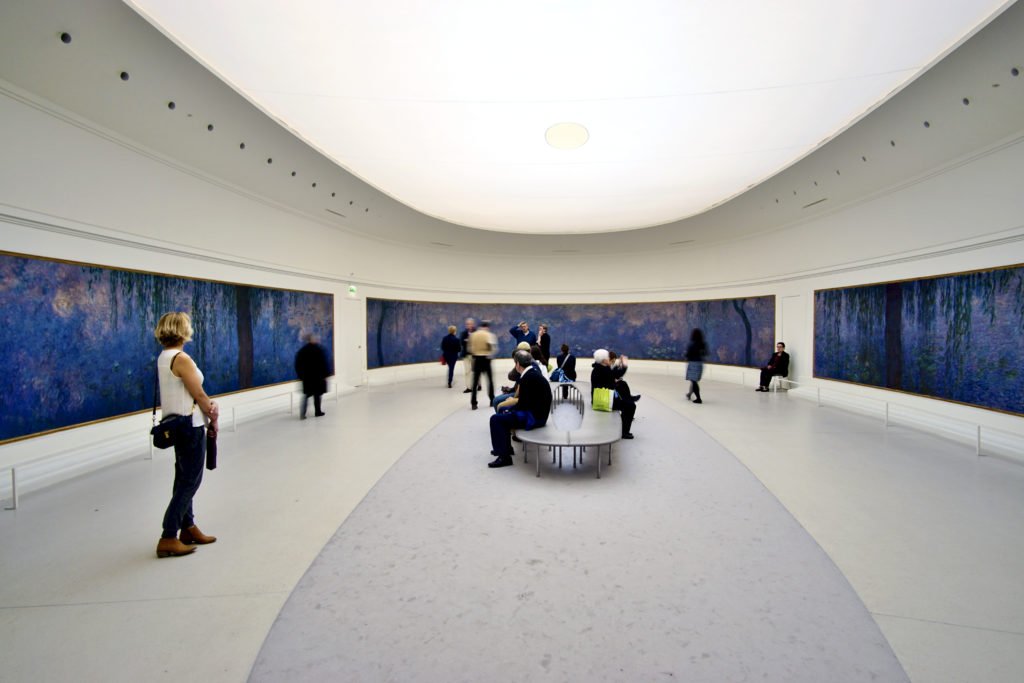
In 1909, the first major Nymphéas series was shown to critical acclaim. In 1914, eight monumental panels were commissioned for a purpose-built gallery at the Orangerie. The result was immersive and unprecedented—less a sequence of paintings than an environment. It has often been called the “Sistine Chapel of Impressionism,” though Monet would likely have bristled at the comparison. His private life, however, closed on a quieter note. Alice Hoschedé, his companion and later wife, died in 1911 after a long illness, leaving Monet increasingly isolated in his final years.
Monet died in 1926. Giverny passed to his son Michel, who chose not to live there. The gardens fell into neglect. Only after Michel’s death did the property enter public hands. Over decades, the house and gardens were painstakingly restored. Today, Giverny feels inevitable. But it was built slowly, stubbornly, and at great personal cost. First a world of plants, then a world of painting, until the two became inseparable. Today, on a day trip to Giverny, you can see the vibrant palettes Monet chose for the facade and interiors. In the final analysis, Monet’s legacy extends well beyond Impressionism, though he’s always called its founding father.
By the end of his life, he had pushed painting toward abstraction without a focal point. He influenced everything from modern landscape painting to Abstract Expressionism. The late Nymphéas panels, in particular, reshaped how artists thought about scale, immersion, and the act of looking. They anticipate Abstract Expressionism and influenced Pollock, Rothko, Newman, and Mitchell. Where To See Monet In ParisIf you want to see Monet well—not just once—Paris is the place. You can see his artworks in several major museums, each revealing a different phase of his career. I’ve written in detail about the most important ones below.
Musée de l’Orangerie Musée Marmottan Monet It holds the pivotal Impression, Sunrise and an extraordinary range of works from across his career, many donated directly by his family. This is the museum for depth.
Musée d’Orsay Petit Palais I hope you’ve enjoyed my mini biography of Claude Monet. You may find these other Paris art guides useful: Pin it for later.
|